Introduction
LA’s 60s rock scene is often overlooked compared to its Bay Area counterpart. Los Angeles and San Francisco were the twin poles of the blossoming California counterculture. LA was a power center, home to major record labels like Capitol. The city had a high-level hit machine with bands like the Beach Boys, who topped the charts in the early 60s. LA’s Byrds launched the folk-rock movement.
And then, psychedelic rock burst on the scene in the spring and summer of 1966. In quick succession, a series of best-selling albums opened the sonic doors of perception, including two by LA bands. Pet Sounds by the Beach Boys and Fifth Dimension by the Byrds carried folk rock into a new matrix of possibilities.
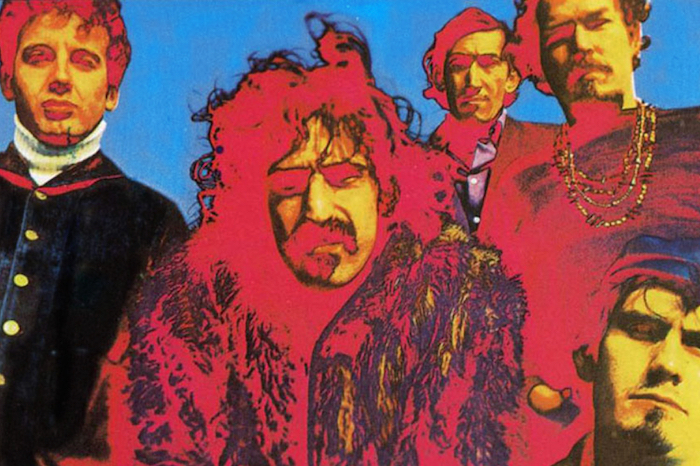
But below ground, an emergent subculture took the spirit of experimentation higher. Much higher. Calling themselves “freaks,” fans and musicians like Frank Zappa advanced the avant-garde leanings of the Beatles’ Revolver. Sonic anarchists, Zappa’s Mothers of Invention unleashed an LA mini-scene that was relatively unknown in the fall of 1966.
Tom Nolan
Into this milieu stepped an 18-year-old stringer for the Los Angeles Times, Tom Nolan. He dispatched first-hand accounts of the city’s diverse rock scene to Times readers.
Nolan captured the action in an extraordinary article called “The Frenzied Frontier of Pop Music,” which ran in November 1966. The piece ran in the Times’ Sunday magazine, WEST. Weekly inserts like WEST rewarded readers with end-of-the-week collections of lengthy articles and criticism. Sunday magazines provided a launching pad for other influential music journalists like Ralph Gleason. He broke into newspaper writing with his “column “Rhythm Section” ”Rhythm Section” column in the San Francisco Chronicle’s Sunday mag, This Week.
Sixties Sunday weeklies like these in culturally diverse cities like LA embodied a clash of bourgeoise America and emerging youth subcultures. WEST exemplified this. Articles like Nolan’s “Frenzied Frontier” disrupted the usual flow of gardening tips, travelogues, and home exercises. In future issues, WEST’s graphic design took a decidedly psych art direction with underground cartoonists like Victor Moscoso.
“The Frenzied Frontier”
This new view permeated “The Frenzied Frontier.”
Nolan began with an account of a Mothers concert in LA’s Shrine Hall that brought out the city’s freaks en masse for the first time. Nolan focused on “the new direction in pop music” ushered in by the Beatles, Rolling Stones, Beach Boys, et al. Aftermath and Pet Sounds had just been released. Nolan presciently wrote:
Frank [Zappa] is contributing to the current development of pop music into an exciting 20th-century musical expression. For pop music has come a long way since the early days of rock … All that is in the past, and the Mothers of Invention are helping, in their surrealistic fashion, to create a New Music that functions less as dance music for a Saturday Night Hop, and more as listening music for the age of the Jet.”[i]
Nolan used a free-flowing style with an eye for detail:
The music on Freak Out is a conglomeration of electric-and-steel cacophony: about 20 instruments (including French horns, woodwinds, and what sounds like 12 million kettle drums) that play, among other things, a satire on old rock’n’roll, a Motown waltz, a song on the Watts riots, and what can only be a call by Frank and the avenging Mothers to some, exploding megatonic 21st-century Judgment Day.[ii]
The Interviews
Nolan conducted interviews with Zappa (“I’ll write a mass for Lenny Bruce!”), Jim McGuinn (“Protest songs are dead.”), and a 23-year-old Brian Wilson (“Our new single, Good Vibrations, is gonna be a monster.”). After describing Wilson standing on a chair in a recording studio listening to a playback of a recent track, Nolan ended the article with a headful of questions:
And as you watch Brian Wilson up on the chair with his head up next to the speaker, you wonder if all that effort from this beardless, chubby prophet will cause a revolution of sorts. And if it does, will the revolution or Brian Wilson have to compete with the revolution of Frank Zappa? Will Los Angeles become the starting place and chief battleground of the confrontation between Two Lifestyles? Will the forces of (if we must) Good and Evil meet on the darkling plain? And what would be the eventual result of such a momentous contest? Or will anyone really care? Will the revolution never come about?[iii]
These questions remain unanswered almost sixty years later as scholars debate the significance of the sixties counterculture.
Conclusion
“The Frenzied Frontier of Pop Music” exemplifies the first attempts by young journalists in the 60s to make sense of their generation’s so-called “revolution.” Nolan, while moved by the kaleidoscopic movement, is also open-eyed. He asked questions rather than proclaiming answers.
Nolan’s article was an important contribution to the 1960s discourse about the rising psychedelic rock scene. For more about how journalists chronicled the action, check out my book, The Life and Writings of Ralph J. Gleason.
A few final notes: this article contains really fine photos by Jim Marshall of the Mothers concert, Zappa, McGuinn, Wilson, and the Grateful Dead—another sign of WEST’s hip-art direction. In addition to the LAT, Nolan went on to write for Rolling Stone and Cheetah during the 1960s. In later years, he became an acclaimed, award-winning writer and currently resides in LA. Rock’s Back Pages has a great selection of Nolan’s writings, including articles in Cheetah.
[i] Tom Nolan, “The Frenzied Frontier of Pop Music,” Los Angeles Times WEST Magazine, Nov. 27, 1966: 39.
[ii] Ibid.
[iii] Ibid: 42.


Leave a Reply