Introduction
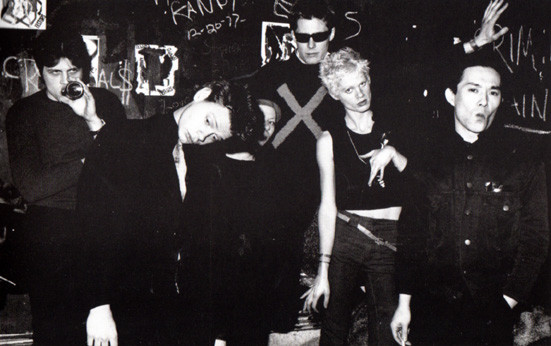
Singer-saxophonist James Chance undeniably brought a sense of noir menace to 1980s pop music:
Some may find Chance/White unlistenable or dismiss him as an egotistical maniac. … Both may be true. He’s also capable of putting menace and adventure into music at a time when both elements are in short supply. [i]
Wayne Robins, Newsday
Chance led the emergent New York no wave scene in the 1970s and 1980s. In Part 1, I examined how critics first reacted to Chance’s avant-garde music and aggressive performance style.
Although Chance figures prominently in the literature on no wave, few researchers other than Bernard Gendron have written about how the press shaped Chance’s image and defined his music. Thus, waiting to be explored is how critics helped Chance subvert one of the pillars of music listening: pleasure. Discordant, distorted, and unstructured, Chance’s punk jazz challenged the norms of listenability. However, supportive critics challenged their readers to heed Chance’s radically unsettling music.
Like a Snake Shedding Its Skin
In Part 1, I ended with Roy Trakin’s contentious New York Rocker interview with Chance. Trakin prefaced the interview with a lengthy interview that provided one of the first analyses of Chance’s music:
The first cut on No New York is the Contortions’ “Dish it Out,” and that it does, leaping out at you like a snake shedding its skin. The twisted, snarling rhythms owe at least as much to Albert Ayler, James Brown, and Duke Ellington as they do to rock ‘n’ roll, and a quick glance at the James Chance Record collection confirms this suspicion. Alongside Iggy, Nico, the Sonics, and the Strangeloves sit Voodoo Trance Music, Bohannon, and Kool and the Gang. [ii]
So, Trakin discovered that Chance’s tastes blended proto-punk, garage rock, and funk. The writer heard this in Chance’s punk jazz:
[The Contortions play] a mixture of freeform jazz and punk rock, the swirling, intense, anarchic beat somehow managing to come together and form a murky, dangerous undertow that sucked in the listener. Chance himself continued to goad the audience with his outrageous behavior, and the whole spectacle was very entertaining. [iii]
Indeed, the element of danger became a common theme in writings about Chance’s sound. Trakin concluded the introduction and addressed his combative interview with the saxophonist:
… my interview with him was not as informative as I would have liked. It is difficult to penetrate the Chance ‘no’ facade of negativity and anti-intellectuality … But I still believe if you read between the lines, you will get an accurate view of this young man. Rather, in a typical blank fashion, what Mr. Chance doesn’t say is much more revealing than what he ultimately does say. [iv]
John Rockwell on James Chance
Chance drew the attention of other New York music writers. Times critic John Rockwell found Chance’s music worth writing about but disliked the violence. In January 1979, he wrote:
A couple of weeks ago, a performance by a band called the Contortions set one listener [Rockwell] to brooding about an issue broader than anything the Contortions themselves have accomplished. That issue is hostility and rock ‘n’ roll …
Physical violence is nothing new in rock, made most famous by Iggy and the Stooges in Iggy’s more flamboyant youth. But James Chance, the singer for the Contortions, has given to insulting his audience and striking out into the crowd, actually slapping as he goes. Sometimes he gets toughed back, which he seems to enjoy.
Now, all of this might seem more pathological than musical or even sociological, except that the Contortions make very interesting music. If the music were just a primitive onslaught, it would be easier to accept Chance’s act as the product of some drug-crazed irrationality – a primal scream against the world.
But because the music is clearly intelligent, rehearsed, thought through, and original, there is a strong assumption that Chances’ show of hostility is planned, too. The trouble – apart from the real possibility that Chance is going to get himself hurt by someone he provokes too far – is that such extreme anger is self-defeating …
Real anger can be a cleansing passion, revolutionary in its energy. But cheap hostility is no nobler than facile love duties. It’s just petty and foolish.[vi]
Agreed. But given that Rockwell was one of the most brilliant and open-eared pop critics of his time, one wishes he had more to say about the music. That would come later.

Buy James Chance
Later that year, James Chance and the Contortions released their first album, Buy. Previously, Chance had his girlfriend, fashion designer Anya Phillips, photograph New York dominatrix Terence Sellers for the cover; her dress, a rope-like web of confining straps.

Buy opened up a new type of musical spatiality. Uncommonly expressive musical sounds zing in and out over a steady bass line. Chance speak-sings or blows his horn like a dying alien creature pleading for comfort. A sense of peril pervades.
New York Daily News critic Ernest Leogrande reviewed Buy and wrote that Chance was a “deliberately manic figure in performances … flailing his skinny body into the audience to challenge their composure or their boredom … but also challenging them to flail back …”[vii] A ritualist attack on the monotony of modernity. Yet, Leogrande was lukewarm about the music.
Rolling Stone‘s Dave Marsh gave Buy three stars but with a caveat:

Listenability in rock music had not been tested since the days of Captain Beefheart’s Trout Mask Replica or Lou Reed’s Metal Machine Music. Even punk, at its most corrosive, kept a beat as it slammed away. Once again, open-eared critics like Robins and Trakin put their credibility on the line for a musician who expanded the limits of listenability.
Conclusion
In summary, these critics contributed to an emergent no wave discourse that framed Chance’s music as a radically unsettling force. It was not an easy task as critics, like their readers, found themselves listening to the unlistenable.
Why give these writings a second read today when critics routinely valorize noise rock bands? These writings show that we got here because music critics transgressed the boundaries of popular tastes. Writers like Wayne Robins legitimized the unlistenable.
Robins wrote in Newsday in 1980:
It is an indication of my own quirky metabolism that at times when I’m very nervous, I find the music of the Contortions, also known as James White and the Blacks, quite relaxing.[viii]
A critical role of music critics is to share their counter-intuitive reactions to music, such as chilling to a menacing sax solo while wondering who the saxophonist will assault next. Consequently, by sharing such quirks, critics encourage listeners to embrace their contradictory reactions to complex new music.

[i] Wayne Robins, “On Music,” Newsday, Jan. 25, 1980: Part II 29.
[ii] Roy Trakin, “James Chance,” New York Rocker, Jan. 1979: 14.
[iii] Ibid.
[iv] Ibid.
[v] Ibid.
[vi] John Rockwell, “Hostile Rock ‘n’ Roll Has Become Normal,” Lincoln Journal Star, Jan. 4, 1979:10.
[vii] Ernest Leogrande, “The Contortions,” Daily News, Dec. 10, 1979:45.
[viii] Wayne Robins, “On Music,” Newsday, Jan. 25, 1980: Part II 29.
Don’t forget to check out my my book, The Life and Writings of Ralph J. Gleason.
Share:
Subscribe and receive free posts sent to your mailbox:
Leave a Reply