Introduction

Mr. White takes the funk rhythms of Clinton and puts them through the oral equivalent of a funhouse mirror and then spikes them with a jangled, frenetic skitter aided by electronic distortion (George Kanzler on Chance). [i]
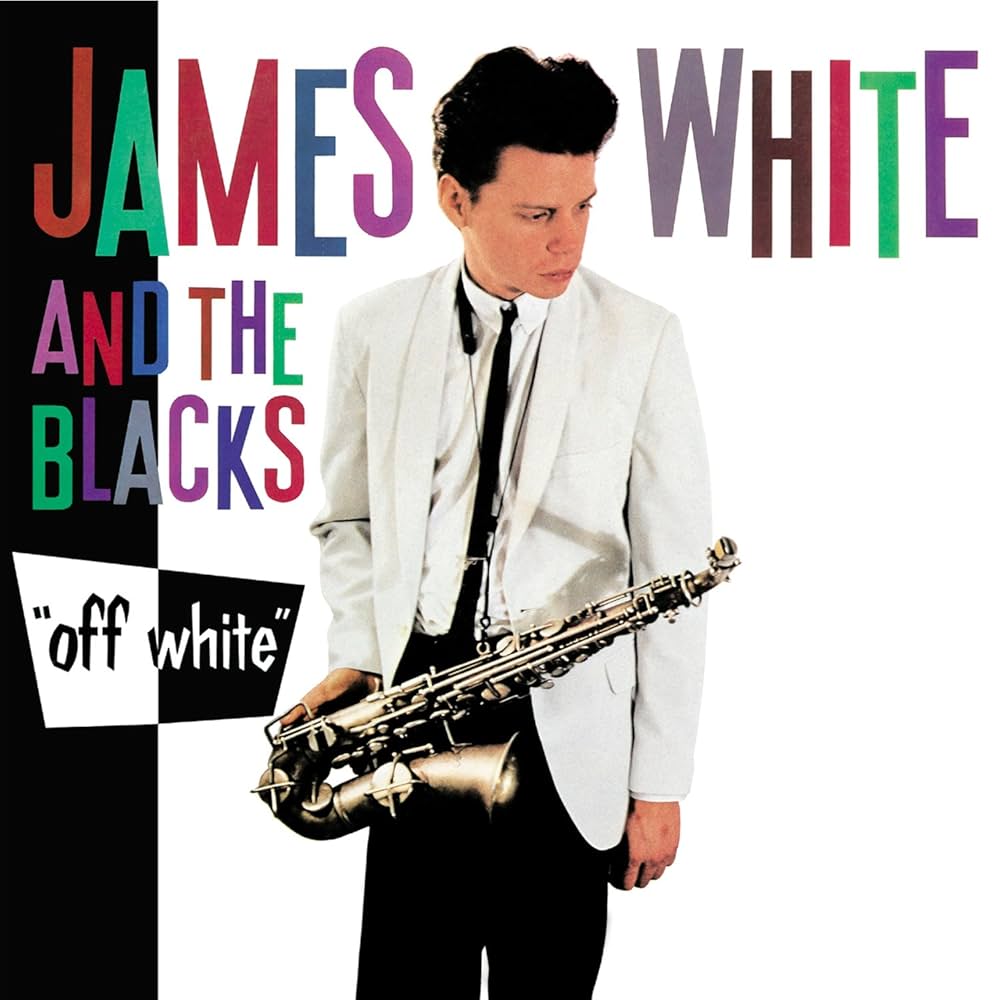
In the early 1980s, pop journalists interested in no wave music had something new to write about. James Chance had put together a new band, James White and the Blacks, and released the album Off White. Music journalists familiar with Chance’s unconventional sounds praised his shift towards dance-club rock music.
But how did critics respond to Chance’s incorporation of danceable funk music into his punk style? I argue that a group of open-minded music writers supported the music of James Chance because of his musical devolution.
In particular, New York City critics like John Rockwell and Wayne Robins understood the significance of Chance’s embrace of funk. Writers for significant dailies, these critics raised questions about the cultural value of mainstreaming underground music. Does the positive impact on dominant culture override the commercialization of an emergent culture?
James Chance Becomes James White
Not all critics praised Chance’s music. For example, the rock critic for the Wilmington, Ohio, News-Journal wasn’t having any of it. Amidst reviews of mainstream rock albums by Pink Floyd and the like came this assessment of Off White:
Most people won’t like this record [because of] the dissonant saxophone and general chaos, not to mention some questionable taste. Make this one for connoisseurs only.[ii]
But New York critics took a more nuanced view. For instance, Wayne Robins wrote in Newsday:
I’ve been getting perverse pleasure from the band’s two simultaneously released albums … Both albums can be mean-spiritedly dissonant at times …
… White confronts the incongruities of his style, which is a nasty parody of the kind of dance music of which James Brown was the primary impresario … There’s also a randy excursion into rock pornography in a duet with Lydia Lunch called “Stained Sheets.” It’s mean – Lunch squeals like a rubber duck caught in a palpitating vice …[iii]
Pornographic duets
In another column, Robins celebrated “Unconservative Pop”:
There’s no question that pop music in 1980 showed signs of returning to the conservatism that dominated the sound in the 1970s BSP (Before the Sex Pistols). Between increasingly timid radio programmers and acutely bottom-line-conscious record company executives, it’s been difficult for innovative artists to get a proper hearing. But it hasn’t all been bleak …
Robins recommended a batch of recently released “unconservative” pop records. These discs ranged from the Residents’ Commercial Album to Frank Sinatra’s Trilogy (“the lapse in taste and judgment makes the most daring rock sound cautious”). Robins also included Off White,
[a] no wave fusion of punk and funk in which White does a pornographic duet with Lydia Lunch, yet so shows a social consciousness on cuts such as “White Savages” …

John Rockwell Rethinks the Music of James Chance
A notable New York rock critic reassessed their earlier negative take on Chance and no wave – John Rockwell:
This movement represents a coming together of several disparate kinds of musicians: punk rockers such as James Chance and the Contortions … blues veterans such as left-hand Frank … avant-garde jazz musicians with the blues experience such as James Blood Ulmer … and hovering over it all, as father figures, Miles Davis, Ornette Coleman, and George Clinton of Parliament Funkadelic.
Rockwell used his substantial cultural capital as a Times critic to validate the punk- jazz fusion:
The trend does suggest two related issues that are worth discussing now. One is the fresh light this fusion casts on the murky relationship between rock and jazz. And the other is the steady evolution of some forms of rock into art music …
[Rock musicians’] concern for their audiences sometimes purges them of arcane self-indulgence and invests their music with a universality that jazz can lack.
It is this consideration that helps explain why some of us welcome the funk, punk, and jazz fusion so warmly.
Rockwell saw no wave following the same path that jazz did in the 1940s when it became more intellectualized:
… some of the underground rock musicians in Manhattan … have transcended old-fashioned pop-rock into the realm of art. They’re more concerned now with making music and pleasing their peers (who may consist of the audiences at the Manhattan dance-rock clubs) than with winning big-time record contracts, getting AM airplay, and topping the charts. Like the jazz musicians, many new wave bands now produce and release their own records distributed through their own record store network. And they have their own magazines and audiences to celebrate them without ever really hoping to cross over to the mainstream.[iv]
Additionally, Rockwell wrote that rock musicians care about their audiences, which “purges them of arcane self-indulgence, and invests their music with a universality that jazz can lack.” He explained:

James Chance and Danceable Rock
Other critics began to pick up on the danceability of Chance’s music. It was the era of Disco, much maligned by rock fans. But one exception was Wayne Robins:
The absurdity of the conflict between rock and disco fans came into clear focus during the summer of 1979 thanks to one song, “Pop Muzik” by M. The record was both a perfect new wave rock record in its own eccentrically sung, cybernetically minimal fashion and a perfect disco record with its solidly mechanical dancing beat. Rather than continuing the fruitless war, “Pop Muzik” offered the terms of compromise. Let’s keep dancing, but let’s do it to a modernized version of the old-fashioned rock’n’roll …
A tangent to the rise of danceable rock has been the increased interest in funk, a basic form of rhythm and blues that had its aesthetic defined by James Brown’s records in the mid-1960s … George Clinton, a songwriter and rhythm and blues visionary, uses many of Brown’s former sidemen in the Parliament/Funkadelic musical conglomerate, the most influential funk band of the day.
More than a Cult?
Clinton has, in turn, inspired James White, the New York singer and bandleader usually associated with no wave, a dissonant, extremist fringe of new wave. While Clinton’s same core of musicians records as both Parliament and Funkadelic, White and his musicians perform as James White and the Blacks and James Chance and the Contortions.
White has developed a working relationship with jazz musician Joseph Bowie, who often appears on White/Chance shows with his own band Defunkt. This fusion of funk, punk, and jazz is still developing. It’s uncertain whether it will attract anything more than a cult following.[v]
Thus, Robins deftly connected the dots between Brown, Clinton, and White. In Chance, Robins saw the hope for rock modernizing while becoming more danceable.

Conclusion
Summing up, New York rock critics helped bridge the gap between rock music and funk in the early 1980s by supporting the music of James Chance. This was because, although rock critics differed in their opinions of Off White, they recognized the significance of Chance’s music. In particular, New York Times critic John Rockwell’s support of punk jazz and its funk influence brought artistic legitimacy to no wave and Chance’s work. This was reinforced by Wayne Robins’ take on Chance’s turn to funk, which supported the idea of rock music as dance music.
Diehard no wave fans may see these mainstream critics’ views as invalid in contrast to writers who wrote for punk and new wave publications. But pop critics for major dailies spread no wave’s influence. Of course, this raises questions about the cultural value of mainstreaming underground music – the positive impact on dominant culture versus the commercialization of emergent culture. This debate continues today.
Therefore, looking at how these writers mediated Chance’s danceable funk music provides insight into how critics created an accord between no wave and funk in the early 1980s. During that period, James Chance energized the discourse about no wave music with his new band, James White and the Blacks, and their recording debut, Off White. Critics attuned to Chance’s music applauded his turn to dance-club rock music.
However, as James Chance received acclaim from a handful of critics, he remained unfulfilled as an artist:
That whole no-wave scene that was an attack on the new wave movement was – and still is – shallow. I want something more.
So, once again, the iconoclastic musician launched a band that transgressed the rules of pop music.

Notes
[i] George Kanzler, Jr., “Disco May Be Dying, but Funky Beat Goes On,” Baltimore Sun, Feb. 2, 1980: 7.
[ii] Gary Mullinax, “Music,” Wilmington News Journal, Dec. 16, 1979: 80.
[iii] Wayne Robins, “On Music” Newsday, Jan. 25, 1980: Part II 29.
[iv] John Rockwell, “Show World Spotlight,” Times-Tribune, Jan. 25, 1980: 16.
[v] Wayne Robins, “Rock: Disco Truce,” Newsday, March 9, 1980: Records 4.
Don’t forget to check out my my book, The Life and Writings of Ralph J. Gleason.
Share:
Subscribe and receive free posts sent to your mailbox:
Leave a Reply