A New Perspective of the Beatles’ Formative Years in the Liverpool Music Scene
Welcome to Part 6 of my six-part series celebrating Tony Barrow, the Beatles’ press officer. In addition to his essential role with the band, Barrow penned a remarkable pop music column for the group’s hometown newspaper, showcasing his passion and dedication to music. Taking a close look at Barrow’s column provides us with a new perspective of the Beatles’ formative years in the Liverpool music scene.
Beatles fans know Tony Barrow as the Beatles’ press officer from 1962 until 1968, when Apple Records took over the group’s promotion. In that role, Barrow shaped the Beatles’ narrative, from the release of “Love Me Do” through the release of Magical Mystery Tour.
However, Barrow had another career as the pop music critic for the Liverpool Echo. Indeed, writing his column “Off the Record” was how Barrow acquired the sensibility needed to appreciate the Beatles’ music. Although Barrow may not be well-known in postwar music journalism, he played a key role during the early Merseybeat era. As the Liverpool Echo‘s music critic from 1954 to 1963, Barrow shaped the Merseyside music scene and the Beatles’ narrative.
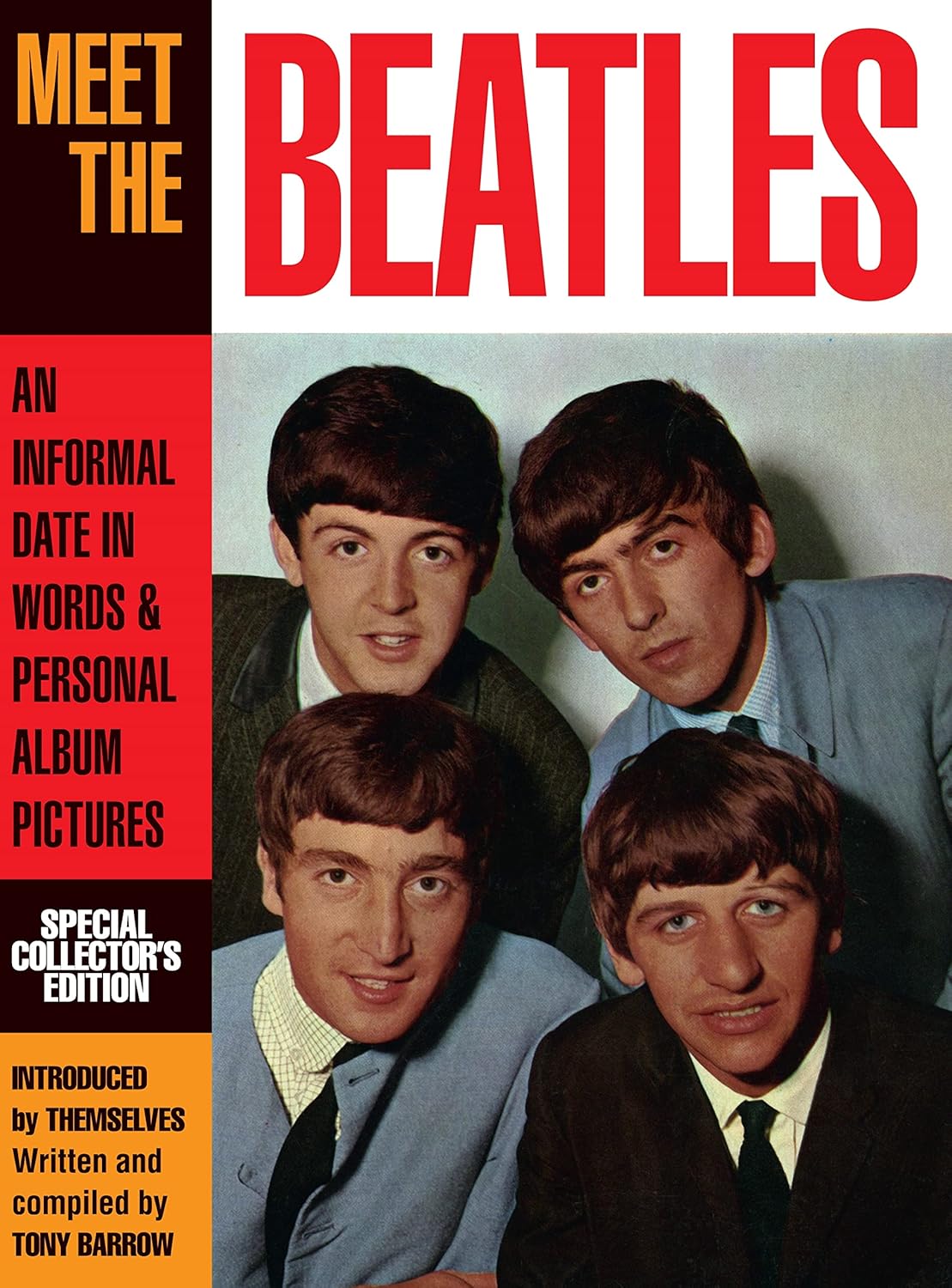
Part 6 looks at an extraordinary series of articles Barrow wrote for the Echo in 1963. In these pieces, he shared his firsthand observations of a band on the verge of international stardom. Barrow also wrote a magazine-style book, “Meet the Beatles,” one of the first fan publications about the band. The book and the Echo series confirmed Barrow’s significance as a top music journalist of the Merseybeat era.
It’s the Beatles
Barrow named the Echo series “It’s the Beatles.” Unlike his column, he wrote the articles under his real name, not the pseudonym “Disker.” Days in advance, the Echo plugged the first article. This shows how the Beatles brand now had the power to attract readers.

When the first article appeared, the Beatles had recently played an explosive show at the London Palladium, credited with launching Beatlemania. Barrow wrote about the after-party:
Room 704 of the Governor House Hotel was the scene of a small but somewhat special celebration party. Four immensely happy, if slightly weary, Beatles were trying to make themselves believe that they had really topped the television bill at the most famous variety theater in the world! Bunches of proud Beatle-parents were present to assure the boys it all happened …
Shop-talk chatter about showbiz topics jostled for hearing space alongside assorted family news offered and exchanged at high speed …
The host, group manager Brian Epstein, sat beside a busy telephone, sipping a Scotch and replying to a ceaseless stream of press inquiries.
An immaculately tail-coated waiter drew a comment from John Lennon to the effect that he hadn’t realized The Undertakers were present [a Merseybeat band].[i]
Kids Breaking through the police cordons
Next in the article, Barrow shared an account by road manager Neil Aspinall about the difficulty of getting the Beatles out of the Palladium to an awaiting police escort after the concert: “We had to run fifty yards to it with the kids breaking through the police cordons and cameras flashing all over the place.”[ii]
On a lighter note, Paul McCartney reminisced about the Beatles’ first show on a large stage when they shared a bill with Little Richard at the Liverpool Empire Theater:
“We’d never played to a big theater audience. I think it was the first time we’d been told to wear stage makeup, too.
We only had to put on a 12-minute performance, but we were all scared stiff throughout the evening in case anything went wrong.”[iii]
George Harrison added,
“Our first record, ‘Love Me Do,’ had just come out, and we weren’t quite sure how the local audiences would feel about it. We knew most of them were pleased we got a recording contract but some people had already made up their minds about their own favorite numbers in our club repertoire. They told us all the various R&B titles we should have recorded instead of ‘Love Me Do.’”[iv]
Afterward, as the post-concert party wound down in the wee hours of the morning, someone brought in the morning editions of newspapers covering the Palladium show. This prompted the Beatles and their parents to gather around and read the headlines. Barrow wrote, “The excitement and enthusiasm could not have been greater …”[v]
The Skiffle Days
In the second part of his series, Barrow wrote about the early years of the Beatles before Ringo joined the group. The article abounds with interesting asides that would be featured in future Beatles bios.

Barrow wrote a fascinating account of the Liverpool skiffle scene as it was during the Quarrymen’s time:
It is worth remembering that it was comparatively inexpensive to form a group and to put it into action during the middle years of the ‘50s. Unlike the present Big Beat boom, the skiffle era called for unamplified instruments. It is, after all, the high price of electrical equipment that has since bumped up the running costs of any vocal or instrumental group …
Shortly before Christmas [1958], John, Paul, and George gave up all hope of securing sufficient engagements to make things seem worthwhile. The demand for skiffle had shrunk at an alarming rate.
Elsewhere in towns and cities all over Britain, hundreds of other redundant groups pitched their guitars into dustbins and turned to other hobbies.
For some reason, Merseyside groups were not discouraged to the same extent, and it was from the dying skiffle boom that the Mersey Beat drew its first breath.
The reason for the localized switch from skiffle to a boisterous blending of rhythm and blues plus rock ‘n’ roll has never made itself clear, even to the musicians who were involved. It defies precise explanation even if we settle for the half-truth by talking about the attractive amount of semiprofessional club work available to any young Liverpool vocalist or instrumentalist capable of putting on a tolerably entertaining act.
In any event, the Quarrymen ceased to exist. The three boys met for front room practice sessions, using stacks of American rhythm and blues records as the basic material for their improvised music making.[vi]
The Beatles’ Ascent
In the next article of the series, Barrow focused on the Beatles’ ascent from a small-time beat group to selling a million copies of Please Please Me. He depicted Brian Epstein as the key catalyst. Barrow quoted Epstein, Cavern owner Ray McFall, and the club’s announcer Bob Wooler.
Barrow began with a July 1961 show at Litherland Town Hall by the Beatmakers, a pick-up supergroup composed of members of the Beatles and Gerry and the Pacemakers.
It was after that show that Epstein entered the Beatles’ lives. McFall provided a fascinating account of how the manager groomed the band:
“Brian Epstein’s decision to encourage the Beatles was the greatest turning point in their lives. He put them through a process which was little short of brainwashing, but he did it all in the most discreet way. The boys welcomed his urgent encouragement. By his own example, he gave them a sense of responsibility. By all the more polite means at his disposal, Brian changed the Beatles from an artistically promising but most unbusinesslike quartet of youngsters into the fantastic entertainers they are today.”[vii]
This story became a standard part of the Beatles’ narrative.
Beatles’ Influence on the Liverpool Scene
In the article, Barrow described the band’s influence on the Liverpool rock scene. For instance, he quoted Wooler that by not becoming stars earlier, the Beatles became models for other struggling musicians and helped the scene grow:
“Throughout 1962 the Beatles were making very frequent appearances at the Cavern and at other Merseyside venues. They were already top dogs in the whole of the northwest area, so it was natural that members of less successful groups should try to locate the secrets of their popularity. And among the crowds of front-row female fans at the Cavern, there would be little knots of semi-professional musicians watching every gesture, every mannerism, every movement made by the Beatles.
Each individual action was observed and noted down to the fingering of each guitar and the flexing of each vocal note. I don’t say that all other city groups decided to become carbon copies of the Beatles, but without a doubt, the majority of them took tips from the success of the area’s leading beat stars, and as soon as the Beatles got their recording contract, the gold rush began. London producers were sent up to Liverpool by every leading record company …
Quite suddenly, Liverpool turned itself involuntarily into the pop music capital of the country.”[viii]
However, Barrow didn’t mention his own role, an apparent attempt to continue conceal his position as Beatles’ publicist. Nonetheless, he gave us some extraordinary insights about the Beatles’ rise.
Beatlemania
When Tony Barrow wrote the fourth article in his series, the Beatles’ “She Loves You” resounded across England and approached a million sales. So it was fitting that he devoted the piece to the effects of Beatlemania on Liverpool and the band. Barrow drew on personal experience and interviews with Epstein and members of the Beatles.
He began with a story about the Beatles’ stage suits. According to McCartney,
“We change our musical tactics whenever one of us comes up with a fresh idea. We’ll do the same with our clothes.”
The subject came up as a result of an amusing, if slightly ironic, incident on the way to a rehearsal. Outside a side street pub in London’s West End, the Beatles and I had passed four smartly turned-out young men, each one obviously priding himself upon the brand new appearance of his Beatles-type collarless jacket.
Their faces registered astonishment and dismay when they recognized their trendsetting prototypes – minus the expected and approved form of attire.[ix]
Then, Barrow gave an account of hanging out with the Beatles as they rehearsed in a television studio for the British show “Thank Your Lucky Stars.” During a break, Barrow spoke to two band members as they recounted memorable events on their rise to stardom:
John said:
“Actually … all this stuff that’s been written about our overnight success exaggerates the true story. Even if 1963 is a year which most of the magazine people have concentrated on, 1962 was just as important from our point of view. Everything was on a much smaller scale then, of course, but at the time, it meant just as much to us.”
Then George added:
“In July and August [1962], we went off to Hamburg again … It was fab. This time we played at the best place in the town. Earlier, we used to get very little money for ridiculously long sessions. We didn’t mind at the time because we still got paid more in Germany than we could have earned in Liverpool. But that final visit showed us the best side of Hamburg’s nightlife.
When we got back to the Cavern, there was a welcome home do laid on for us. That was one of the greatest nights we’d ever known. Such a contrast to the first time we returned and nobody wanted to know.”
1962 Was a Marvelous Year
Epstein concurred with Harrison as the conversation continued, saying, “Yes, 1962 was a marvelous year.”
This prompted a fascinating account by Lennon on the creative benefits of popularity:
“Obviously our own standards improved since we had come under Brian Epstein’s management. We had received the sort of guidance that gave us the right incentive to develop ourselves. Our equipment was much more expensive, much more useful. Very gradually we were persuaded to ‘think big.’
We never bent our musical ideas towards commercial pop, but with plenty of better bookings coming in, we were able to stop worrying and concentrate on growing a wider repertoire. Paul and I did a lot of writing in 1962. We still had all the free time we needed to do this sort of work. We’d never liked looking after the money side of things, but now that responsibility had been lifted out of our hands. We knew enough about Brian to know that we were getting a fair deal. We had all the advantages of local success without the personal disadvantages of the Big Time.”[x]
In other words, the band used the perks of success to allow them to grow artistically, something many artists fail to do.
Scraps in between
While his bandmates discussed the pros and cons of success, Ringo Starr lamented the loss of regular meals on the road, “We eat like dogs, one big meal each day and lots of scraps in between.”[xi]
Then Lennon sparked a discussion about recording:
It’s really gear in the recording studio … We look forward to making records, just like kids look forward to Christmas.[xii]
Paul described the long wait between recording a disc and its release:
“As soon as we’ve heard the final playback, it’s all over for six weeks. We can’t talk about it because the record company doesn’t want to take orders for it until near the release date. We can’t sing it in the theaters for the same reason. We usually think of extra ideas we could have put into it, but it’s too late for changes, and we have to forget about it for six weeks.”[xiii]
One wonders what changes the band might have made to their early classic songs had they had the freedom.
The article ended with the band members discussing the impact of fame. Lennon addressed the effect on their privacy of answering fans’ questions:
The things that kids are asking are OK, but your private life takes a thorough probing, too, once you’ve got news value as an entertainer.[xiv]
Barrow painted a picture of Lennon and his bandmates just as they became public figures.
Thousands of Letters Every Week
In the fifth installment of his series, Barrow discussed the Official Beatles Fan Club, the band’s road managers, and the Beatles’ first annual Christmas record:
I heard the first unedited tape of this recording when I visited the London headquarters of the Official Beatles Fan Club. The taped material, transplanted to the grooves of a seven-inch record, is to be sent to club members in time for Christmas.[xv]

The young, all-woman fan club staff showed Barrow around their office. They discussed plans for upcoming conventions and the “thousands of letters every week” they received. One of the staff said,
“Every time the boys are in town, they come into the office … They’re wonderful like that. They dictate letters to thank people for birthday gifts, even if they haven’t had time to write personally.”[xvi]
Next, Barrow discussed the band’s road managers, Neil Aspinall and Malcolm Evans. Aspinall recounted yet another episode of getting the band to and from shows past crowds of ecstatic fans:
The boys had to go through a builder’s yard, up some scaffolding, and across the roof of the Queen’s Theatre. They had to be lowered into the wings, through a door and the roof.
During the same month, the Beatles were trapped in a hotel lounge for the best part of a week because vast gangs of holidaying fans surrounded not only the group’s Bournemouth hotel but the adjacent theatre.[xvii]
Such accounts became part of the Beatles’ legend and conveyed the band’s enormous appeal to fans.

With the Beatles
Barrow concluded his Echo series with a bang—his account of a Beatles’ recording session for their second Parlophone album, With the Beatles. Based on his observations, Barrow provided fascinating details of the historic session.

Barrow referred to it as a Thursday session, indicating it was likely the October 17, 1963 session. A milestone because it was their first use of four-track recording. One of the tracks they worked on was “I Want to Hold Your Hand,” which would become the band’s first US hit single in January 1964.
Barrow wrote:
Once inside the studio, the four boys released an amount of pent-up pre-session excitement via a noisy tuning-up routine.
“We have to get through two sides this afternoon,” confided producer George Martin. “They’ll form the boys’ next single. Should be released a few weeks before Christmas.[xviii]
One of the tracks Martin referred to was “I Want to Hold Your Hand.” Amazing to ponder the impact that record would make in three months and beyond.
Barrow described the band’s working relationship with their producer:
George Martin has become a close friend of the Beatles. His relationship with the boys exceeds the bread-and-butter acquaintance that exists between the majority of recording managers and their artists. He is capable of matching the sharp wit of The Beatles, yet he is equally capable of squeezing from them their finest work whenever they visit his studio.
“This [“I Want to Hold Your Hand”] is one of John and Paul’s latest compositions,” he told me a little later as the Beatles belted out their bold beat in the studio below. We watched through a control room window and listened through a big loudspeaker. Do you like it? Catchy, isn’t it? This’ll probably be on the ‘A’ side of the new release.”[xix]
This passage demonstrates Barrow’s exceptional access to the Beatles as he experienced the band recording a landmark pop music record.
made my Liverpudlian heart feel good
After finishing the take, the band and Martin listened to the playback. Martin “approved of the hand-clapping the boys had superimposed above their singing and playing.”[xx] Barrow assured the reader that it was the Beatles’ hands doing the clapping.
Barrow said that sitting in London listening to the Beatles’ scouse accents “made my Liverpudlian heart feel good.”[xxi] He ended the piece and the series on this note:
Four smoke-thick accents ironed out a final point … before the 12th take put another potential hit in the can.[xxii]
Barrow’s Echo series on the Beatles was likely the first long-form article about the band. He documented a pivotal period in early Beatlemania, from partying after the London Palladium concert to nailing the final take of “I Want to Hold Your Hand.” The series is an extraordinary example of participatory journalism.
Meet the Beatles
But Barrow was just getting warmed up. A few days after he concluded the Echo series, he published a magazine-style book called Meet the Beatles. Later, its title became the name of the band’s first US album. Subtitled “An Informal Date in Words and Personal Album Pictures,” this book set the standard for the many similar publications that flooded the newsstands across England and America.

In addition to the obligatory biographies and photo stories of a band on the run, Barrow included a poignant piece on Liverpool that captured the shadows and lights of the Merseybeat scene:
Big chimney stacks blowing clouds of darkening smoke into a low gray sky. Tough but tiny tugboats burping out their messages of warning through a Mersey fog. Tall, once white buildings blackened by the grime of an industrial jungle and still scarred by wartime bomb damage …
Servicemen remember Liverpool as an embarkation point.
But there is another side to this thriving place, the side where the Beatles were born and where their big beat was bred. Much of it is underground as if the Liverpudlians wanted to escape from the darkness outside into the brightness below, the brightness of the big beat. The audio brightness which has made the walls of many a city basement bulge with young jivers since the earliest days of the skiffle boom …[xxiii]
This “audio brightness” emanated from Liverpool nightspots such as,
The Cavern Club, renowned Palladium of the Mersey Beat circuit, where top groups draw capacity crowds at lunchtimes as well as in the evenings.
The decor of these clubs blends in with the darkness of Liverpool’s sustained public monuments. The brightness, the excitement, the gayety, the thrills come from the performing groups and not from the dismal backdrops.
A single battery of white spotlights pierced through the smoke-filled disinfected air to pick out the lean faces of the figures on the bandstand. Flashing guitars reflect thin rods of dazzling white light into the mass of gyrating stompers. Leather-clad youths pick out hefty metallic guitar phrases and cry thickly accented lyrics from their stomachs.[xxiv]
In this passage, Barrow visualized the future of rock music as a hard glint of light in a greying world.
Epilogue
After the publication of Meet the Beatles, Barrow prepared for the Beatles’ first tour of America. On radio stations across the United States, the band’s “audio brightness” pierced through the aftershock following the Kennedy assassination. Darkness defined light, and the Beatles revived a grieving nation.
Barrow remained the Beatles’ press officer for five history-making years. He traveled the world with the band and conducted legendary press conferences in which John, Paul, George, and Ringo playfully countered reporters’ questions.
However, despite the demands of world touring, Barrow continued to occasionally write for the Echo. For example, he wrote “On Tour with the Beatles” just as “Daytripper” topped the charts in December 1965. The article’s theme was a familiar one: the conflict between the band’s twin desires for privacy and fan interaction. Barrow wrote, “until he’s in his bed and behind a latched door does a Beatle find privacy. Not that John, George, Paul, and Ringo seek solitude. They like some people and some noise about them.”
However, the article showed that Barrow remained a record reviewer at heart. In it, he reviewed several discs, including the Beach Boys’ Little Deuce Coupe. Not a fan, he wrote that in Britain “We appreciate and understand hot roddin’ music even less than surfin’ [music].”
In 1968, Barrow left NEMS and launched a public relations firm. The Echo continued to publish “Off the Record” under the byline “Disker” until December 1969, but it’s not clear if Barrow contributed. 36 years later, Barrow wrote a memoir, John, Paul, George, Ringo & Me (2005).
Tony Barrow passed away on May 14, 2016, at the age of 80. McCartney posted on Twitter:
Tony Barrow was a lovely guy who helped us in the early years of The Beatles. He was super professional but always ready for a laugh.[xxv]
The tweet immediately garnered 1.5K loves.
Conclusion
In writing “Off the Record,” Tony Barrow developed a pop music aesthetic that predisposed him to appreciate the music of the Beatles and other Merseyside bands.
Yet, as we saw, Barrow initially missed the promise of Merseyside rockers paying their dues night after night in Liverpool clubs. And even after discovering the Beatles, he was hardly a rock purist; Barrow loved Broadway numbers as much as Merseybeat songs.
But by the time the Beatles recorded for NEMS, Barrow was venturing into basement clubs where “white spotlights pierced through the smoke-filled disinfected air to pick out the lean faces of the figures on the bandstand,” where “Leather-clad youths pick out hefty metallic guitar phrases and cry thickly accented lyrics from their stomachs.”[xxvi]
Tony Barrow, the ultimate Beatles critic, underwent an extraordinary transformation. Fortunately, he left us a legacy of enlightening writings.

To discover more about how pop music critics impacted the reception of the Beatles and the British Invasion, read The Life and Writings of Ralph J. Gleason, due out in paperback in August 2025.
Notes
[i] Tony Barrow, “It’s the Beatles,” Liverpool Echo, Oct. 21, 1963: 5.
[ii] Tony Barrow, “It’s the Beatles,” Liverpool Echo, Oct. 21, 1963: 5.
[iii] Tony Barrow, “It’s the Beatles,” Liverpool Echo, Oct. 21, 1963: 5.
[iv] Tony Barrow, “It’s the Beatles,” Liverpool Echo, Oct. 21, 1963: 5.
[v] Tony Barrow, “It’s the Beatles,” Liverpool Echo, Oct. 21, 1963: 5.
[vi] Tony Barrow, “It’s The Beatles,” Liverpool Echo, Oct. 22, 1963: 16.
[vii] Tony Barrow, “It’s the Beatles,” Liverpool Echo, Oct. 23, 1963: 4.
[viii] Tony Barrow, “It’s the Beatles,” Liverpool Echo, Oct. 23, 1963: 4.
[ix] Tony Barrow, “It’s the Beatles,” Liverpool Echo, Oct. 24, 1963: 4.
[x] Tony Barrow, “It’s the Beatles,” Liverpool Echo, Oct. 24, 1963: 4.
[xi] Tony Barrow, “It’s the Beatles,” Liverpool Echo, Oct. 24, 1963: 4.
[xii] Tony Barrow, “It’s the Beatles,” Liverpool Echo, Oct. 24, 1963: 4.
[xiii] Tony Barrow, “It’s the Beatles,” Liverpool Echo, Oct. 24, 1963: 4.
[xiv] Tony Barrow, “It’s the Beatles,” Liverpool Echo, Oct. 24, 1963: 4.
[xv] Tony Barrow, “It’s the Beatles,” Liverpool Echo, Oct. 25, 1963: 12.
[xvi] Tony Barrow, “It’s the Beatles,” Liverpool Echo, Oct. 25, 1963: 12.
[xvii] Tony Barrow, “It’s the Beatles,” Liverpool Echo, Oct. 25, 1963: 12.
[xviii] Tony Barrow, “It’s the Beatles,” Liverpool Echo, Oct. 26, 1963: 4.
[xix] Tony Barrow, “It’s the Beatles,” Liverpool Echo, Oct. 26, 1963: 4.
[xx] Tony Barrow, “It’s the Beatles,” Liverpool Echo, Oct. 26, 1963: 4.
[xxi] Tony Barrow, “It’s the Beatles,” Liverpool Echo, Oct. 26, 1963: 4.
[xxii] Tony Barrow, “It’s the Beatles,” Liverpool Echo, Oct. 26, 1963: 4.
[xxiii] Tony Barrow, Meet the Beatles (World Distributors, 1963): 12.
[xxiv] Tony Barrow, Meet the Beatles (World Distributors, 1963): 12.
[xxv] Chris Johnston, “The Beatles’ former press officer Tony Barrow dies,” The Guardian, May 15, 2016. Webpage retrieved Jan. 15, 2025: https://www.theguardian.com/music/2016/may/16/the-beatles-former-press-officer-tony-barrow-dies.
[xxvi] Tony Barrow, Meet the Beatles (World Distributors, 1963): 12.
© 2025 Donald Eugene Armstrong Jr.
Leave a Reply