In writing The Life and Writings of Ralph J. Gleason, I drew on interviews conducted for the book and journal articles that preceded it.[i] Interviews with musicians, journalists, and music industry professionals. Each knew Gleason personally, and I’m grateful for their perspectives on the iconoclastic music critic. Their accounts helped me present a multi-dimensional portrait of this unique figure in the history of music journalism.
Here they are in alphabetical order, great people all:

Steve Boone: Bass player and songwriter for the Greenwich Village rock band, the Lovin’ Spoonful. Gleason was a fan and recognized the band’s innovative sound.

John Handy III: San Francisco alto saxophonist and educator. Gleason covered the John Handy Quintet and got them a slot on the 1965 Monterey Jazz Festival, where they recorded an influential live album.

Nat Hentoff: Jazz critic, historian, social commentator. Hentoff was among the most influential music critics on the East Coast, writing for DownBeat and the Village Voice. He and Gleason were both friends and colleagues and influenced each other’s work.

Terri Hinte: Publicist and writer. Gleason hired Hinte as a publicist for Berkeley’s Fantasy Records when he was a vice president of the label. Hinte became Fantasy’s publicity director, where she promoted the music of esteemed musicians such as Bill Evans and Sonny Rollins.

Denise Kaufman: Lead singer and bass player for one of the founding San Francisco rock groups, the Ace of Cups. The all-girl band opened for Jimi Hendrix, The Band, and Janis Joplin. Kaufman helped acquaint Gleason with the emergent San Francisco counterculture, along with other young members of the movement.

Jorma Kaukonen: Lead guitarist for the San Francisco rock band the Jefferson Airplane and the duo Hot Tuna. Kaukonen read Gleason’s music column in the San Francisco Chronicle and remembers his ubiquitous presence in the city’s rock club scene.

Jon Landau: Music critic, manager, and record producer, well-known for his work with Bruce Springsteen. One of America’s pioneering rock critics, Landau wrote for Crawdaddy! before working for the newly founded Rolling Stone.

Greil Marcus: San Francisco author, music journalist, and cultural critic. As a young journalist, Marcus worked alongside Gleason at Rolling Stone, where they both weathered the magazine’s growing pains. When Marcus worked on the manuscript for his lauded book on American music, Mystery Train, Gleason read the galleys and provided advice.

Janet Morrison Minto: Songwriter and vocalist who was married to Irish rock singer Van Morrison. The couple had just moved to the Bay Area when they sat down with Gleason at his home to discuss Morrison’s masterwork, Moondance. The result is one of Gleason’s finest articles, “A Young Irishman Haunted by Dreams.” Gleason’s Irish-American heritage tinges the piece.

Alan Rinzler: Editor and head of Rolling Stone’s Straight Arrow Press from 1971 to 1975. Rinzler was there when Gleason had business dealings with his Rolling Stone boss, Jann Wenner, concerning the sale of Gleason’s Straight Arrow Press stock.

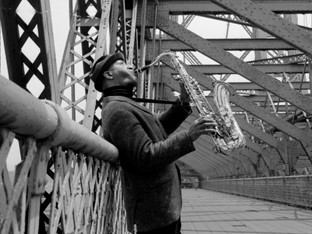
Sonny Rollins: Tenor saxophonist and highly influential jazz musician who recorded milestone albums like Saxophone Colossus and jazz standards such as “Airegin.” Gleason boosted Rollins’ career early on by featuring him on his acclaimed television program Jazz Casual.

Gene Sculatti: San Francisco music journalist who wrote one of the first accounts of the city’s psychedelic rock scene, “San Francisco Bay Rock,” for Crawdaddy! magazine. Sculatti was among the young music journalists in the Bay Area influenced by Gleason’s column.

Davin Seay: Author and journalist who grew up in Monterey and read Gleason’s column. With Gene Sculatti, he co-authored San Francisco Nights: The Psychedelic Music Trip, 1965-1968.

Joel Selvin: San Francisco music critic and author who became the pop music critic for the San Francisco Chronicle following Gleason. Selvin went on to write many well-received books on pop music, including his most recent, Drums & Demons: The Tragic Journey of Jim Gordon.

Grace Slick: Lead vocalist and songwriter for the pioneering San Francisco band the Jefferson Airplane. One of the most iconic figures in rock music, Slick wrote the song “White Rabbit,” which reverberated across the sixties counterculture.

John Swenson: Music critic, author, and editor who co-edited the first Rolling Stone Album Guide. As a young writer at Crawdaddy! and Rolling Stone, Swenson turned to Gleason’s music columns as models of enthusiasm and wide-open musical tastes.

Ed Ward: Music critic and author. Ward wrote for Rolling Stone when Gleason worked there, as well as writing for Crawdaddy! and Creem. He co-founded Austin’s South by Southwest music festival and co-wrote Rock of Ages: The Rolling Stone History of Rock & Roll.

Jann Wenner: Co-founder of Rolling Stone and the Rock and Roll Hall of Fame. Gleason began mentoring Wenner when he was a college student writing for the UC Berkeley student newspaper, teaching him about jazz and helping him further his career. In addition to being interviewed for my book, Wenner provided a trove of unpublished correspondence between him and Gleason.

Baron Wolman: San Francisco photojournalist who was the first chief photographer for Rolling Stone. Wolman met Gleason and Wenner when they first considered publishing a music magazine. Wolman created iconic images for Rolling Stone that are among the most memorable from that era.

Robert Zagone: Independent filmmaker and director of television programs for San Francisco public television. Zagone began working with Gleason on Jazz Casual and worked with him on other jazz documentaries. The two produced three syndicated television programs on the San Francisco rock scene that introduced it to viewers nationwide.
American culture from the 1950s to the 1970s was enriched by these members of the music industry and its press, and they made an invaluable contribution to The Life and Writings of Ralph. F. Gleason. Additionally, Gleason’s children and many of his friends answered my never-ending questions, their information steering me to a deeper understanding of this complex individual.
A list of book interviewees that contains both Grace Slick and Sonny Rollins indicates a wide-ranging look at music journalism history. More importantly, such a diverse list reflects Gleason’s expansive cultural tastes. No surprise for someone who once quoted Chuck Berry and Friedrich Nietzsche in back-to-back sentences.
Notes
[i] Don Armstrong and Jessica Armstrong. 2013. “Dispatches from the Front: The Life and Writings of Ralph J. Gleason.” Rock Music Studies 1 (1): 3–35.
Don Armstrong. 2019. “Hot Collecting Off the Record: Ralph J. Gleason’s Start in Music Journalism.” Jazz Perspectives 12 (2): 247–82.
Leave a Reply