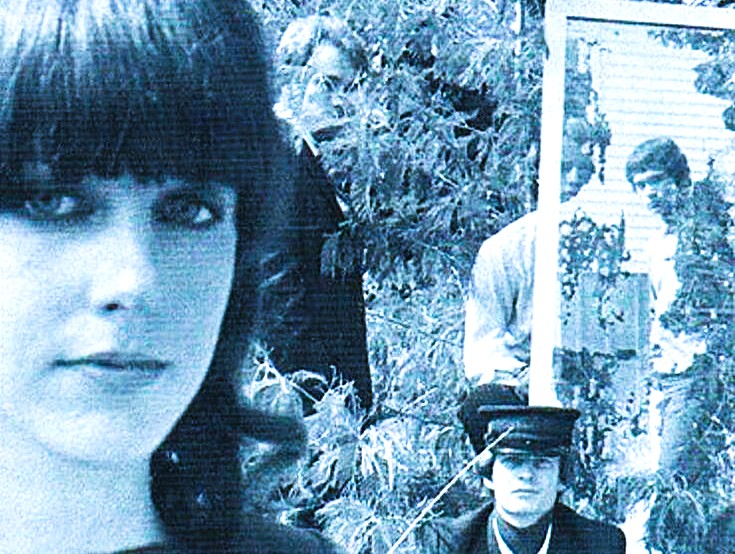
In my book, The Life and Writings of Ralph J. Gleason, I describe the concert that ignited the sixties counterculture: “A Tribute to Dr. Strange.” The event sparked the San Francisco psychedelic rock scene by bringing together the Bay Area’s top rock bands for a community dance concert.
The event was produced by the Family Dog, a concert production collective made up of young, entrepreneurial rock enthusiasts. They brought in bands such as the Great Society, featuring lead vocalist Grace Slick.
The band’s co-founder, guitarist-songwriter Darby Slick, wrote:
The Family Dog concert was named “A Tribute to Doctor Strange,” after the comic book of the same name. The overwhelming part of the experience for me, and I think virtually for everyone who attended, was the certainty of the birth of a scene. We, the collective, we, had arrived, and there were so many of us, and we were weird and interesting and lovable … This was not only a party, it was our party, by and for the people …
The title of the show beautifully set the mood. Only Freaks, as we lovingly called ourselves, would want to attend something called “A Tribute to Doctor Strange.” Many of us used to smoke dope and read those comic books. I don’t know if their authors and illustrators used drugs, but at the time, we all thought so. The comic characters always seemed to be warping in and out of strange mental worlds, and the illustrations looked psychedelic.
Darby Slick. Don’t You Want Somebody to Love (SLG Books, 1991): 56.

We, the collective, we, had arrived, and there were so many of us, and we were weird and interesting and lovable … This was not only a party, it was our party, by and for the people …
Weekend of Protest
Indeed, the concert was literally a party – to celebrate a protest march that failed to reach its destination, yet attained a greater prize.
The march was organized by the Vietnam Day Committee (VDC), a vibrant coalition of left-wing political groups, student organizations, labor unions, and pacifist religious communities in the United States that passionately opposed the Vietnam War during the transformative counterculture era. Founded in Berkeley, California, in the spring of 1965 by the inspiring activist Jerry Rubin, the VDC actively championed peace and justice throughout much of the conflict.
On October 15 and 16, 1965, the VDC conducted two 15-mile marches from Berkeley to the Oakland Navy base, where U.S. troops departed for Vietnam.
However, the first march failed. Oakland police forcefully turned back the protesters, in one case injuring a young woman with a gas grenade. The San Francisco Chronicle covered the melee:


Leaders of the Vietnam Day Committee, which organized the march, promised they’d be back.
Day Two
The VDC kept its promise and marched again the following day. But this time, the infamous Hell’s Angels motorcycle gang sided with the police. Shouting “America First,” the thugs attacked the marchers, setting off a melee in which several Angels were arrested. However, the damage was done, and once again, police turned away the VDC marchers.
And once again, the Chronicle captured the action in words and images:


The Party
However, the VDC marchers resolved to fight again another day. And to boost their moral, they had a post-demonstration dance to look forward to.
In my book, The Life and Writings of Ralph J. Gleason, I describe how these celebratory events were a tradition in the American student protest movement, dating back to the days of the Depression.
And in the 1960s, post-demonstration dances with live music had become part of the San Francisco protest scene. This was thanks to a group of comic-book-reading freaks living in a house named after a beloved canine. And so, when they created a production company to take these dance parties to a higher level, they called themselves the Family Dog.
Their spokesman was Luria Castell.
The Dog house
With her waist-length hair and flowing gowns, Luria Castell could have walked out of a Pre-Raphaelite painting. A well-known figure among the Bay Area left, Castell defied the State Department ban on Cuba in 1963, visiting the country with a group of Bay Area activists. They met with Fidel Castro, who showed them the results of the revolution.
After the trip, Castell engaged in demonstrations through 1964 and spent 14 days in jail for trespassing during a teach-in — the 20-year-old embodied resolve.
Castell belonged to the local chapter of the W.E.B. Dubois Club, a leftist group sponsored by the Communist Party USA. Gleason had recently lectured on jazz for the group, where he likely met Castell.
The DuBois Club held wild celebrations after demonstrations that brought together Bay Area radicals, musicians, and rock fans. Gleason had attended similar parties as an antiwar activist at Columbia University in the 1930s when Popular Front organizations held post-demonstration dances with swing bands.
And so, when Gleason met the Family Dog in 1965, he already understood the power of music to rally political causes.
Wild Weekend
The group told Gleason of their plan to bring together San Francisco’s musicians, music fans, and young political activists. They rented a large union hall on the Bay and scheduled the event as a post-demonstration dance for the second VDC march. They named it A Tribute to Dr. Strange.
Gleason announced the dance-concert in his Chronicle column. Behind the scenes, he provided advice to the Family Dog and the protestors.
When the big night came, Gleason famously attended Dr. Strange, where, in addition to digging the music, he met a young Berkeley protestor named Jann Wenner.
He reviewed the concert in a column called “Wild Weekend Around the Bay.” For Gleason, “wild” meant ecstatically engaging. This was high praise from the columnist, who had covered jazz for 30 years, befriending greats from Duke Ellington to John Coltrane. And his seal of approval showed extraordinary open-mindedness for a 48-year-old father of three.
In “Wild Weekend,” Gleason expressed a turning point in his tastes as he embraced the emergent youth movement and its music.
The column has three parts. In the first part, Gleason described the VDC celebration, noting the protestors’ music. Then, he took a 180-degree turn and reviewed a show by comedian Woody Allen, whose act disappointed him.
However, it was the third part of the column that ultimately became quoted in multiple histories of the San Francisco counterculture. In it, Gleason wrote:
It was a gorgeous sight. The lights played over the floor, the bands wailed out their electronic music, and the audience had a blast! … and they dance beautifully.


Leave a Reply