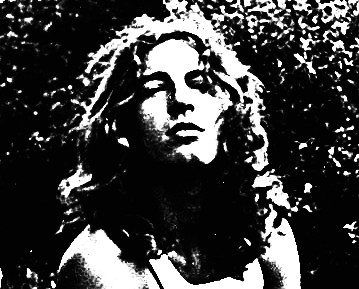
Bruce Springsteen is once again in the public eye, with an upcoming biopic and Nebraska ’82: Expanded Edition due tomorrow. Thanks to Springsteen’s ability to maintain his creative edge, the Jersey Shore rocker has remained popular since the release of his breakthrough disc, Born to Run.
However, before that leap forward, even before he landed a recording contract, Springsteen struggled to make a name for himself in the Shore’s music scene. Helping him was Joan Pikula, a rising music writer for the Asbury Park Press.
Introduction
Well, I stood stone-like at midnight
Suspended in my masquerade
And I combed my hair ’til it was just right
And commanded the night brigade
I was open to pain
And crossed by the rain
And I walked on a crooked crutch
I strolled all alone
Through a fallout zone
Came out with my soul untouched
I hid in the clouded wrath of the crowd
When they said, “Sit down,” I stood up
Ooh-ooh, growin’ up[1]
“Growin’ Up” was track two on Bruce Springsteen’s 1973 debut album, Greetings from Asbury Park, N.J. In it, Springsteen spun a surrealist tale suggesting scenes from his own coming of age on the Jersey Shore – a stroll through a “fallout zone” with his soul intact, defiant and alone.
These lyrics track with Springsteen’s rebellious beginnings as a high school rock musician, through his dues-paying years in a series of Jersey bands. Luckily, we have a series of contemporaneous accounts of Springsteen’s early evolution thanks to local journalists. Leading those writers was the Asbury Park Press’s Joan Pikula.
Pikula joined the many local newspaper journalists of the time who unknowingly documented the history of American popular music in the making. Due to these reports, artists received exposure and obtained status. Indeed, supportive writers like Pikula play an essential role in local rock music scenes.
However, histories of American rock criticism from the 1960s to the early 1970s tend to focus on the well-known critics of that era. As a result, many of the lesser-known journalists who contributed have been overlooked, especially women music writers.
By taking a closer look at these under-recognized journalists, we discover new historical facts and gain a better understanding of the importance of critics in local scenes destined to reshape popular music.
Joan Pikula and Rock Coverage in the Asbury Park Press
Journalist Joan Pikula began covering entertainment for the Asbury Park Press in the mid-1960s. In her thirties, Pikula possessed the blend of youthfulness and experience needed to identify with the rising counterculture while retaining journalistic objectivity.

Like many other female journalists who covered rock music at the time, Pikula was assigned her newspaper’s youth culture feature. In “The Teen Scene,” Pikula wrote about topics such as the opening of the Hullabaloo club in New York City. Eventually earning a credit as the newspaper’s “entertainment editor,” Pikula reviewed music, books, and movies.
As the Press’s sole music writer, Pikula interviewed essential rock musicians, including an inebriated Janis Joplin and Jim Morrison of the Doors. In early 1970, Pikula launched a new column called “Pop Box.”
Pikula had been following Springsteen’s music career since the late 1960s, when he was the singer-guitarist for the band Child. She once described them as a “four-man rock group [who] built a following like no other group before or since in the Shore area … All the kids talked about last summer was Child; Child and that ‘wild’ guitar player, Bruce Springsteen.”[2]
Whom she soon met.
Pikula lived in the same housing complex as Child’s drummer, Vini “Mad Dog” Lopez. Through Lopez, Pikula met Springsteen and other band members. She joined the band on outings to the resort town of Long Branch. Pikula also joined the band at local gigs.
It was during this time that Pikula began covering the group for the Asbury Press. Child’s manager, Carl “Tinker” West, said that Pikula “liked the band” and “let everyone know when we were playing and what we were doing.” He said that her articles were a “very accurate statement of the band.”[3] Pikula thus began her role as an embed within the Springsteen circle.
The Castiles
Before Pikula began covering Bruce Springsteen in the Asbury Park Press, other New Jersey newspapers had featured his bands.
For example, in the summer of 1966, a captioned photograph of Springsteen’s first band, the Castiles, appeared in the Long Branch Daily Record and the Red Bank Daily Register. The Record’s photo was captioned:
Shore area rock’n’roll group, The Castiles, will be featured Friday night from 7 to 9 o’clock at Lowe’s Drive-In Theater … They’ve played various dances in the Jersey Shore area … The band members, students of Freehold Regional High School, [include] Bruce Springsteen, lead guitar.[4]

The Castiles were a garage rock band formed by Springsteen and his bandmates when they were in high school. The photo appears to be a publicity shot, with the band members carefully posed, wearing Mod band uniforms sporting dark vests over white shirts. All members, of course, wore Beatles bangs.
Captioned photos like these gave the emerging young band credibility while publicizing their services. It appears it worked – a few weeks later, the Register ran an advertisement for the Off Broad Street Coffee House featuring Springsteen and his new band, Earth[5]:

Ads like this provided validation and promotion for emerging bands. And they provided information to fans, such as Springsteen’s move from the Castiles to Earth. The ad also demonstrates how, in the mid-1960s, coffeehouses began featuring rock artists, as well as the folk artists they had traditionally featured. By the way, that $0.75 admission would be equivalent to approximately $7.50 today.
Steel Mill
However, ads and captioned photos are one thing, but nothing gives an artist better publicity than glowing reviews.
Which is what Joan Pikula delivered for Springsteen’s new band, Steel Mill. The group was based on Child’s line-up but played a fierce style of roots-infused hard rock. Lyrics told the stories of down-and-outers from the New Jersey Shore. Steel Mill’s sound foreshadowed the heartland-noir that Springsteen later played.
It was a sound that won over a community of followers, including Pikula. Using her close association with the band, she began a series of lengthy articles about Steel Mill. These texts reflected the new seriousness shown to rock and its community in the early 1970s press. The influence of New Journalism is also evident in how Pikula wrote from an insider’s view, as both a participant and a journalist.
Pikula published her first piece about Steel Mill in April 1970, after the band returned from a West Coast tour. This near-full-page review appears to be the first Asbury Park Press article about a Springsteen band:
You could say they’ve been to Mecca and back if you feel, as many do, that San Francisco’s Fillmore and Matrix are the most important rock houses in the U.S.
They were called ‘Child’ in the beginning, and it was under that name the four-man rock group built a following like no other group before or since in the Shore area. All the kids talked about last summer [in 1969] was Child; Child and that ‘wild’ guitar player, Bruce Springsteen …
Now they’re called Steel Mill.[6]
A Neat Blend of Hard Rock and Country
After that introduction, Pikula quoted a review of the band in the San Francisco Examiner by respected longtime music critic Phillip Elwood.
Elwood reviewed a 90-minute set by Steel Mill at the Matrix nightclub on a rainy Tuesday night. He wrote that the “New Jersey hard rock quartet” gave him one of his “most memorable evenings of rock in a long time.” A remarkable statement for the seasoned critic. Elwood elaborated:
I have never been so overwhelmed by a totally unknown talent. Steel Mill does all their own stuff (mostly written by lead guitarist-singer Bruce Springsteen), and mix things up so informally and well that an observer just has to get involved.[7]

After quoting Elwood, Pikula moved on, describing Steel Mill’s aspirations:
Steel Mill, which sends out a neat blend of hard rock and country, is interested in playing colleges and concert halls. They’ve had it with nightclubs. The clubs, they say, want to provide reproductions of hit records and shy away from original material. Steel Mill wants to provide original material, and they do, written mainly by lead singer-guitarist Springsteen.
Steel Mill got together about a year ago … they practiced daily for a couple of months at the Challenger Eastern Surfboard Factory in the industrial park here, under the watchful eye of Tinker, their manager and owner.[8]
Pikula said the band was “building up a word-of-mouth following,” something her article contributed to. She noted that the band wanted to revitalize the Jersey Shore rock scene by having venues book local musicians. Pikula presciently pondered:
Perhaps Steel Mill will be the Shore’s [Jefferson] Airplane or Band. Perhaps it will be the band to put this coastal playground on the pop music map – Mecca in its own right.[9]
No Guards
Less than a week later, Pikula wrote another lengthy article about Steel Mill, in her Asbury Park Press column “Pop Box.”
Pikula raved about the band’s no-holds-barred abandon.
Springsteen writes most of the group’s material, and it’s good. It’s not a one-man group, but Springsteen is definitely the focal point. He sings in a compelling voice that runs the gamut from screaming blues to country to rock, and he makes the run with ease and skill. The main thing about Springsteen is that he communicates. He does it through the throat and through the guitar, an instrument completely under his control and from which he draws a fantastic range of emotions …
Springsteen’s songs are blues, and they’re solid rock. They’re physical, and they’re political. They’re gentle, and they’re angry. And, most importantly, they’re really fine …[10]
Pikula said that Steel Mill was into a “new way of performing for their people. There are no guards, no barriers, and no obvious regulations. Everything was cool.”[11]

A Social Phenomenon
Two months later, Pikula reviewed a twin bill with Steel Mill and the much-ballyhooed Grand Funk Railroad. For her, the show demonstrated music industry inequity, where the far more talented Steel Mill received second billing – and less money – than the over-hyped Detroit headliner:
While comparing rock groups really isn’t my thing, they are too much a social phenomenon to judge strictly for their musical prowess. And the necessary consideration of audience impact frequently blurs judgments. But sometimes the situation points up the glaring inequities inherent in the music profession, and the comparison is too obvious to pass up …
Comparing the two seems almost irrelevant until you think of that money, then the comparison becomes exceedingly relevant. Musically, Grand Funk doesn’t come anyplace near Steel Mill, yet Grand Funk makes the bread, a prime example of the super hypo. You can do a lot with a lot of money, and Capital Records has a lot of money to spend on Grand Funk, which they’ve been spending …[12]
On the other hand, Pikula wrote, a record label hadn’t signed Steel Mill. She said, “The quality of the music doesn’t have very much to do with it.”[13]
Pikula added that, compared to Mark Farmer, “Springsteen is neither slick nor mediocre. His music is fine, diverse stuff which blends an infinite variety of musical idioms into a rock base. And his playing – inventive, finely shaded and clean – is superb.”[14] Pikula would know; she had written insightful articles about jazz musicians such as Duke Ellington.
She continued:
Where Farmer assaults his audience both in the essence of his music and in his delivery, Springsteen reaches out with a gentle touch. Both make contact, but it’s Springsteen’s warmth and genuine musicality that comes out on top in the comparison, and Farmer’s deliberated act that suffers.[15]

Clearwater Swim Club
However, Springsteen’s warmth and “gentle touch” weren’t enough to persuade a local police chief from pulling the plug on a Steel Mill concert. And Pikula’s powers of persuasion failed to stop her editor from pulling her article about the show.
The concert occurred at the Clearwater Swim Club in Middletown, New Jersey. The Asbury Park police force had imposed a 10 pm curfew on the club’s shows because of neighbors’ complaints about the loud volume. Given Steel Mill’s repertoire of extended songs with open-ended jamming, the situation was a recipe for disaster.
Pikula witnessed the predictable clash between rockers and cops. She told a Press reporter who was present:
Near the end of Steel Mill’s last number, power was shut off. The instruments went dead. [The] light show, which had been filling a white drape behind the band with churning colors, went black. There was an instant of bewilderment, then anger. The crowd jumped up, stamping and clapping for more music.
People climbed onto the stage, and three patrolmen began to climb up behind the big amplifiers. One of them grabbed one of the amplifiers while climbing, and they began to wobble.[16]
Organist Danny Federici tried to steady the amp, but then:
Three patrolmen grabbed him, shaking him, poking him in the chest, shouting. One of them took his nightstick and jammed it into the ribs of Bruce Springsteen, who was standing on the stage, still holding his guitar. This was the beginning of the violence.[17]
Pikula described a scene of escalating police aggression against bystanders. In her account, she claimed the police started the mayhem and contradicted the police chief’s statement that fans sparked the turmoil.
The Melee
Pikula’s remarks came at the end of the Asbury Press’s article about the incident, titled “Narcotics Called 1 Cause of Melee.”

The uncredited reporter said the “melee” was caused by “narcotics violations and refusal by musicians to abide by a 10:00 PM deadline.”[18] Indeed, when the club owner “cut off power to the band’s amplifiers [at 10 PM] … The band members plugged into a lighting circuit and continued to play until police broke up the concert about 10:15 PM.”[19]
The reporter noted that, “During the five-hour open-air concert attended by about 3000 young people, 21 arrests were made. Police said they confiscated bags and joints of marijuana.”[20] The reporter said, “Patrolman Robert McNair was bitten and scratched in an attack by a boy and a girl when he tried to arrest a narcotics suspect.”[21] Not surprising for a 1970s rock concert audience.
Pikula’s son, Michael, attended the show with her. He later described the scene:
All hell broke out. The cops were wielding their batons, kids were jumping into the pool, and I saw two cops hit people. My mother cut her leg on a license plate. It was pitch black, and the cops were hitting everything. It was bizarre.[22]
Pikula attended the concert to write a review for the Press. However, the newspaper’s editor pulled the article, and it was never published. This wasn’t the first time her work had been squashed by the newspaper, according to Michael. The paper had also killed her review of an Elton John show.
Following the disastrous concert, Pikula and some of the band members went to Federici’s home. Middletown police later issued a warrant for the keyboardist’s arrest, and Pikula wrote an article about the incident. Michael Pikula said that “the managing editor at the time refused to publish it. He was afraid Middletown cops would cause nothing but trouble for the paper. It was a good story, really.”[23]
The episode demonstrated how a music journalist used their position to defend a local band tangled up in a case of police overreach. Such clashes were not uncommon at that time, when rock music shows stirred moral panic about youth, sex, and drugs.
It Got You on Your Feet
Steel Mill never recovered. Springsteen disbanded the group and formed his own band in 1971. American rock music was changing, due to a new generation of far-sighted musicians such as Springsteen, who deftly blended hard rock with roots music to tell tales of working-class heroes.
Springsteen’s evolution can be seen in Pikula’s review of a concert by England’s Humble Pie with Springsteen as the supporting act. Although the focus of her article was the headliner, Pikula devoted six paragraphs to Springsteen:
The Bruce Springsteen band opened the concert with a set that was a knockout. Springsteen has been holed up for six months getting this band together ever since he disbanded Steel Mill.
He wanted to get some horns and have two guitars going, and be able to take piano occasionally. He wanted, mainly, to make what he called “happy” music, and that’s what he did.[24]
Pikula compared the new group to Steel Mill:
Steel Mill was a band that rocked. It got you on your feet, set you in motion, and kept you there. This band rocks a little differently, more in the rhythm and blues vein than rock and roll, sometimes with a gospel blast that really moves. And it swings. It’s mellow and quite subtle, sending out layers of fat, complex patterns.
The horns are strong and used not as bridges or solo instruments, but as part of the total sound. They’re melded in the work beautifully, adding a rich, swing feeling – and sounding like a lot more than two.
Essentially, the thing to be said about this band, headed by Springsteen and his excellent guitar (and some amazing slide work by Van Zant), is that it is full.
It works. That’s the whole of it.[25]
A Man of Conscience
Two months later, in September 1971, Pikula wrote what appears to be her last article about Springsteen. In it, she reviewed a Springsteen show that was part of a summer free concert series sponsored by the city of Asbury Park.
Pikula began with wistful regret for what felt like the impending demise of outdoor rock shows:
You could tell, somehow, that it was the end of summer, that it was the last of the concerts that were able to go on despite the rising objection across the nation to pop music gatherings, particularly outdoor gatherings and, more particularly, free outside music gatherings.[26]
Starting with the disastrous Altamont Free Concert in 1969, a series of outdoor rock festivals through 1971 was marred by clashes between participants and authorities. This led to an intensification of the older generation’s moral panic over rock music.
To allay these fears, rock music writers like Pikula often highlighted the peaceful and family-friendly atmosphere of many rock events. This is evident in her description of the Springsteen show. She described a mixed audience of older and younger people, including children with their pets, writing that “except for the music and applause, there was an unusual quiet to the crowd.”

A Man of Conscience
As for Springsteen’s music, Pikula described a moment in the free concert when he allowed audience members to come on stage and provide a background chorus to Hank Williams’ “Jambalaya (On the Bayou).”
It was great fun, and maybe that’s the main thing about Springsteen’s music – it’s got a good time sound, and most of the time it makes you feel good.[27]
Most of the time. One poignant exception was a new song by Springsteen, “Festival,”
… a poignant song about the times – with Springsteen singing the most soulful vocal he’s ever done, full of the sadness of these days when the happiness of Monterey and Woodstock have turned into the dreary reality of bad trips and impossible music festivals. It’s such a good song, and maybe the only one done all night that didn’t communicate a sense of well-being. It is, though, a measure of Springsteen’s development as a musician and as a man of conscience.[28]
Future music writers would follow that development for decades. But, for Pikula, this article ended her coverage of Bruce Springsteen. For 18 months, Springsteen’s press coverage had mainly consisted of a series of insightful articles by Pikula. In these texts, she channeled her enthusiasm for Springsteen into thoughtful analyses of a rock icon in the making.
Epilogue
Indeed, no other journalist more astutely reported on Springsteen’s “development as a musician and as a man of conscience” during his pre-fame years. As a participant observer, Joan Pikula used her platform to communicate from within the Springsteen circle. By constructing an identity around the sound and ethos of Springsteen’s bands, Pikula developed a personal aesthetic – a set of values in which the beauty of Steel Mill’s music stood in stark contrast to the monotonous pounding of Grand Funk.
However, Springsteen’s days as a budding unknown were coming to an end, along with Pikula’s coverage of him.
Eight months after the free concert, in May 1972, Springsteen auditioned for legendary talent scout John Hammond. It went well, and that fall, Springsteen formed a new band and recorded his debut album, Greetings from Asbury Park, N.J. Though the album made him a favorite among critics, it had average sales and failed to produce a hit single.
Commercial success evaded Springsteen until 1975, when rock critic Jon Landau recognized Springsteen’s enormous potential and co-produced his breakout album Born to Run, released in February 1975. From that point on, Springsteen and his E-Street Band have defined, re-defined, and sustained heartland rock music.
Conclusion
By taking a closer look at under-recognized journalists like Joan Pikula, we discover new historical facts about musicians. We also gain a better understanding of the importance of local music critics in scenes destined to reshape popular music.
One of those scenes was along the Sixties Jersey Shore, where, like teens across America, Bruce Springsteen found his voice by playing in a rock and roll band:
I was a cosmic kid in full costume dress
Well, my feet they finally took root in the earth
But I got me a nice little place in the stars
And I swear I found the key to the universe
In the engine of an old parked car
I hid in the mother breast of the crowd
When they said, “Pull down,” I pulled up
Ooh-ooh, growin’ up
Ooh-ooh, growin’ up[29]

To learn more about the remarkable history of music journalism, read my book The Life and Times of Ralph J. Gleason.
Notes
[1] “Growin’ Up” lyrics © Bruce Springsteen Music, Sony Pop Music Publishing, Eldridge Publishing Co.
[2] Chris Jordan. “Press’ Joan Pikula, early backer of Springsteen, has died,” app, Feb. 23, 2015. Webpage retrieved Oct. 8, 2025: https://www.app.com/story/entertainment/music/2015/02/23/press-joan-pikula-early-backer-springsteen-died/23902533/?gnt-cfr=1&gca-cat=p&gca-uir=true&gca-epti=z117236e002900v117236b0081xxd118165&gca-ft=174&gca-ds=sophi.
[3] Chris Jordan. “Press’ Joan Pikula, early backer of Springsteen, has died.”
[4] Uncredited photo caption. “The Castiles,” Long Branch Daily Record, July 27, 1966: 17.
[5] Advertisement. “Off Broad Street Coffee House,” Daily Register, Aug. 16, 1966: 21.
[6] Joan Pikula, “The Steel Mill Blazes Trail for New, Talented Musicians,” Asbury Park Evening Press, April 15, 1970: 20.
[7] Phillip Elwood. “A Memorable Wet Night with the Steel Mill,” San Francisco Examiner, Jan. 14, 1970: 32.
[8] Joan Pikula, “The Steel Mill Blazes Trail for New, Talented Musicians,” Asbury Park Evening Press, April 15, 1970: 20.
[9] Joan Pikula, “The Steel Mill Blazes Trail for New, Talented Musicians,” Asbury Park Evening Press, April 15, 1970: 20.
[10] Joan Pikula. “Pop Box: Vibrating Steel Mill,” Asbury Park Evening Press, April 20, 1970: 4.
[11] Joan Pikula. “Pop Box: Vibrating Steel Mill,” Asbury Park Evening Press, April 20, 1970: 4.
[12] Joan Pikula. “Pop Box: Music and Inequity,” Asbury Park Evening News, June 15, 1970: 8.
[13] Joan Pikula. “Pop Box: Music and Inequity,” Asbury Park Evening News, June 15, 1970: 8.
[14] Joan Pikula. “Pop Box: Music and Inequity,” Asbury Park Evening News, June 15, 1970: 8.
[15] Joan Pikula. “Pop Box: Music and Inequity,” Asbury Park Evening News, June 15, 1970: 8.
[16] Uncredited. “Narcotics Called 1 Cause of Melee,” Asbury Park Evening Press, Sept. 15, 1970: 1 and 30.
[17] Uncredited. “Narcotics Called 1 Cause of Melee,” Asbury Park Evening Press, Sept. 15, 1970: 1 and 30.
[18] Uncredited. “Narcotics Called 1 Cause of Melee,” Asbury Park Evening Press, Sept. 15, 1970: 1 and 30.
[19] Uncredited. “Narcotics Called 1 Cause of Melee,” Asbury Park Evening Press, Sept. 15, 1970: 1 and 30.
[20] Uncredited. “Narcotics Called 1 Cause of Melee,” Asbury Park Evening Press, Sept. 15, 1970: 1 and 30.
[21] Uncredited. “Narcotics Called 1 Cause of Melee,” Asbury Park Evening Press, Sept. 15, 1970: 1 and 30.
[22] Uncredited. “Narcotics Called 1 Cause of Melee,” Asbury Park Evening Press, Sept. 15, 1970: 1 and 30.
[23] Uncredited. “Narcotics Called 1 Cause of Melee,” Asbury Park Evening Press, Sept. 15, 1970: 1 and 30.
[24] Joan Pikula. “Humble Pie, Springsteen Play Sunshine in Concert,” Asbury Park Press, July 12, 1971: 8.
[25] Joan Pikula. “Humble Pie, Springsteen Play Sunshine in Concert,” Asbury Park Press, July 12, 1971: 8.
[26] Joan Pikula. “The Springsteen Blues Band Performs,” Asbury Park Evening Press, Sept. 2, 1971: 25.
[27] Joan Pikula. “The Springsteen Blues Band Performs,” Asbury Park Evening Press, Sept. 2, 1971: 25.
[28] Joan Pikula. “The Springsteen Blues Band Performs,” Asbury Park Evening Press, Sept. 2, 1971: 25.
[29] “Growin’ Up” lyrics © Bruce Springsteen Music, Sony Pop Music Publishing, Eldridge Publishing Co.
Leave a Reply